Captain Anchor: A Bold Nautical Display Font
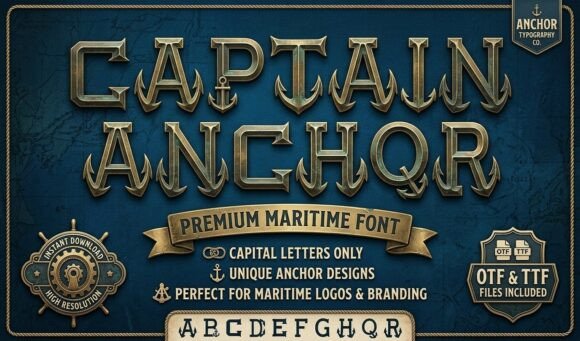
If you're looking to add a maritime flair to your next project, Captain Anchor is a standout choice. This unique display font blends the strength of a classic varsity block style with the unmistakable charm of nautical elements. Each letter features anchor flukes and hooks subtly integrated into the base, giving it a distinctive look that commands attention. Whether you're designing for a coastal business or creating custom merchandise, Captain Anchor brings a sense of adventure and durability to your work.
Designed with both practicality and personality in mind, Captain Anchor is ideal for a wide range of applications. From t-shirt designs to boat lettering, this font works well in both digital and print formats. Its bold structure ensures visibility even at a distance, making it a go-to option for signage, logos, and branding materials. The font's visual appeal makes it perfect for anything from fishing apparel to maritime-themed sports teams, offering a consistent and professional look across different mediums.
Where Captain Anchor Shines
Captain Anchor excels in projects that require a strong, memorable visual presence. For designers working on coastal branding, this font adds an authentic nautical touch that resonates with target audiences. It’s also a great fit for editorial design, where its boldness can highlight key messages or headings. In packaging design, Captain Anchor can elevate product labels, giving them a rugged yet refined appearance that stands out on shelves.
For small business owners and entrepreneurs, Captain Anchor offers a way to create a cohesive brand identity. When used consistently across marketing materials, social media graphics, and website headers, it helps build recognition and trust. Its versatility allows it to pair well with other fonts, whether you're looking for a contrasting sans serif or a complementary script font. This flexibility makes it a valuable addition to any designer's toolkit.
In web design, Captain Anchor can be used for headings or callout text to draw attention without overwhelming the page. Its readability at larger sizes makes it suitable for banners, buttons, and other interactive elements. When paired with a clean, modern typeface, it creates a balanced composition that feels both stylish and functional.
Understanding Readability and Brand Perception
While Captain Anchor is a display font meant for visual impact, its design considerations make it surprisingly readable. The thick strokes and clear letterforms ensure legibility even when used in smaller sizes, though it's best suited for headlines and short phrases rather than long blocks of text. When using it in print, consider the material and size—on a custom mug or decal, it maintains its sharpness and clarity.
The font’s bold, anchored aesthetic influences how audiences perceive a brand. It conveys reliability, strength, and a connection to the sea, which can be especially appealing for businesses in the marine, outdoor, or lifestyle industries. Using Captain Anchor consistently across all brand assets helps reinforce this image, building a stronger emotional connection with customers.
For commercial projects, it's important to review the licensing terms to ensure proper use. Most premium fonts like Captain Anchor come with specific guidelines for digital and print applications, including restrictions on resale or redistribution. Always check the license agreement before using the font in client work or large-scale production.
Choosing the Right Font for Your Project
When considering Captain Anchor, think about the message you want to convey. If your project has a nautical theme or needs a strong, eye-catching presence, this font is an excellent fit. However, if your design requires a more subtle or elegant look, a serif or script font might be more appropriate. Evaluate how the font interacts with other design elements, such as colors, images, and layout structures.
Testing font pairings is crucial for achieving a harmonious design. Try pairing Captain Anchor with a simple sans serif for contrast, or use it alongside a handwritten font for a more casual feel. Keep in mind that too many competing fonts can dilute the overall message. Stick to one or two complementary styles to maintain clarity and focus.
For those new to typography, experimenting with different weights and styles can help find the right balance. Some fonts include multiple variations, such as regular, bold, or italic, which can add depth and dimension to your work. Always test the font in the final context—whether it's a website, print ad, or social media post—to ensure it performs as expected.
Real-World Applications and Recommendations
Captain Anchor is particularly effective in t-shirt designs where bold, stylized text makes a strong impression. It works well for slogans related to sailing, fishing, or beach culture, adding a sense of authenticity and energy. For boat lettering, the font’s durability and visual weight make it a reliable choice that stands up to weather and wear.
In the realm of custom mugs and decals, Captain Anchor adds a personalized touch that feels intentional and meaningful. Its anchored details give it a unique character that sets it apart from generic fonts. For maritime-themed sports teams, the font can be used in uniforms, banners, and promotional materials to create a unified and recognizable look.
When working on logo design, Captain Anchor can serve as a strong foundation for a nautical brand. Pairing it with a simple icon or symbol can enhance the overall visual identity, making it more memorable and impactful. For editorial design, it can be used to highlight section titles or featured content, drawing readers in with its bold and distinctive style.
Ultimately, Captain Anchor is more than just a font—it's a tool that brings a sense of adventure and strength to your creative work. Whether you're a designer, marketer, or hobbyist, this font offers a fresh and powerful way to express your vision. With its unique blend of tradition and innovation, it’s ready to set sail on your next project.